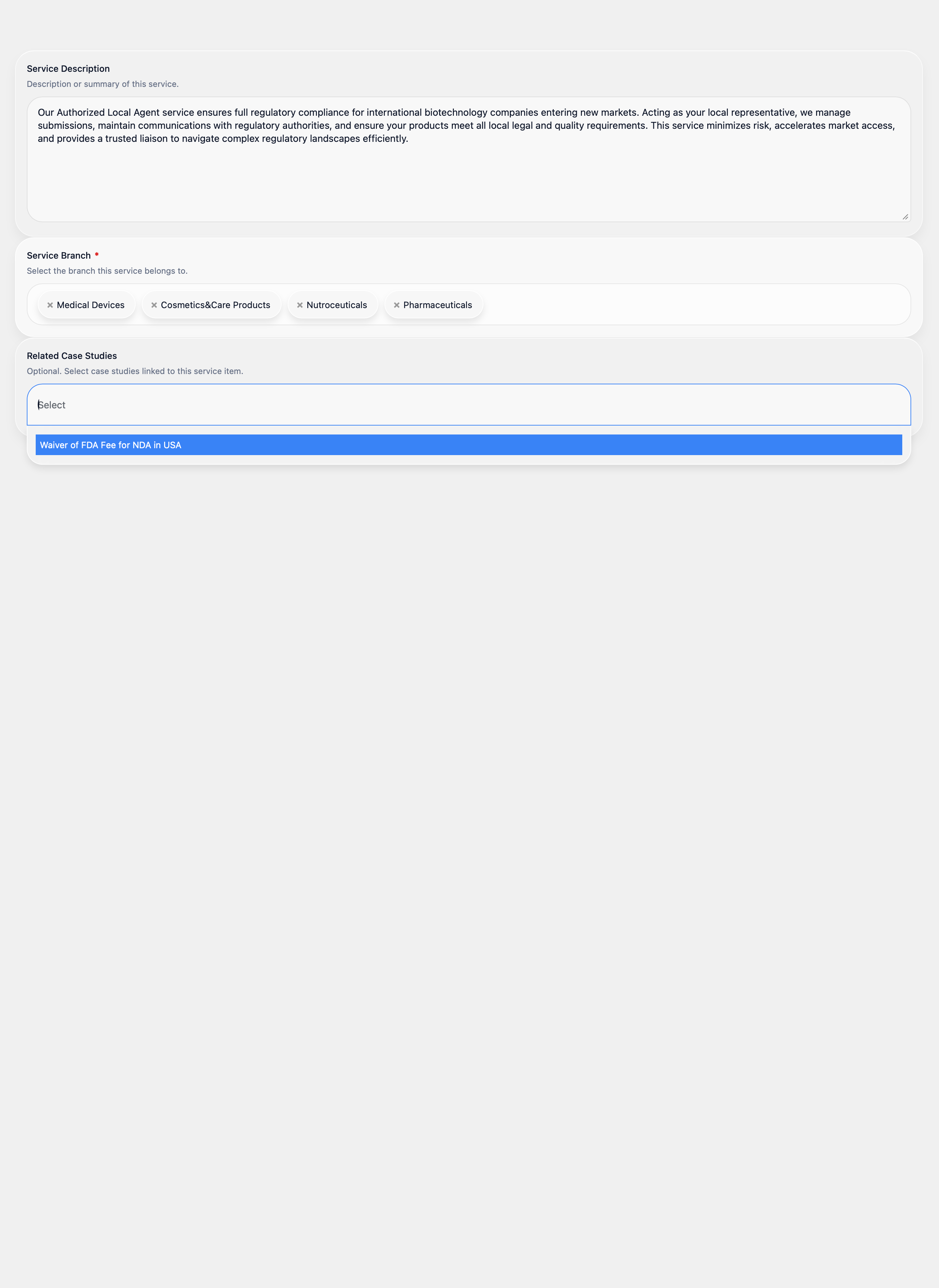
Custom-Designed CMS Interface


When people visit a website, they see pages. What they don’t see is the architecture that makes those pages possible. Every menu item, every tooltip, every contextual link is powered by a system. A system that decides whether a website can scale gracefully — or collapse under its own complexity.
For one of our global clients, it wasn’t enough to think in pages. We had to build a headless CMS: a structured, flexible foundation that connects services, teams, projects, and regions — all in a way editors can manage easily. Their organization operates across continents, industries, and regulatory frameworks, where services differ between regions, case studies span domains, and teams collaborate across offices.
Content, API, Frontend Layers (simplified)
Content Relationships and Dependencies (detail)
Each element needed to exist independently while staying connected. Editors maintain a single source of truth — avoiding duplication, inconsistencies, and mounting maintenance. With a relational system, content lives once, links naturally, and scales seamlessly as the organization grows.
Instead of managing pages, editors manage relationships. Services connect to offices, offices connect to teams, teams connect to projects. The website becomes the expression of this structure — not something maintained separately, but something generated from it.
Think of it like a supercharged category system. Content is defined once, connected to services, regions, teams, or regulatory types, and automatically distributed wherever it’s needed. Add a new office, update a service, or include a document, and the system keeps every page, menu, and tooltip in sync.
The effort shifts from maintaining countless touchpoints to maintaining the structure itself. Complexity doesn’t disappear — but it becomes organized, predictable, and manageable.
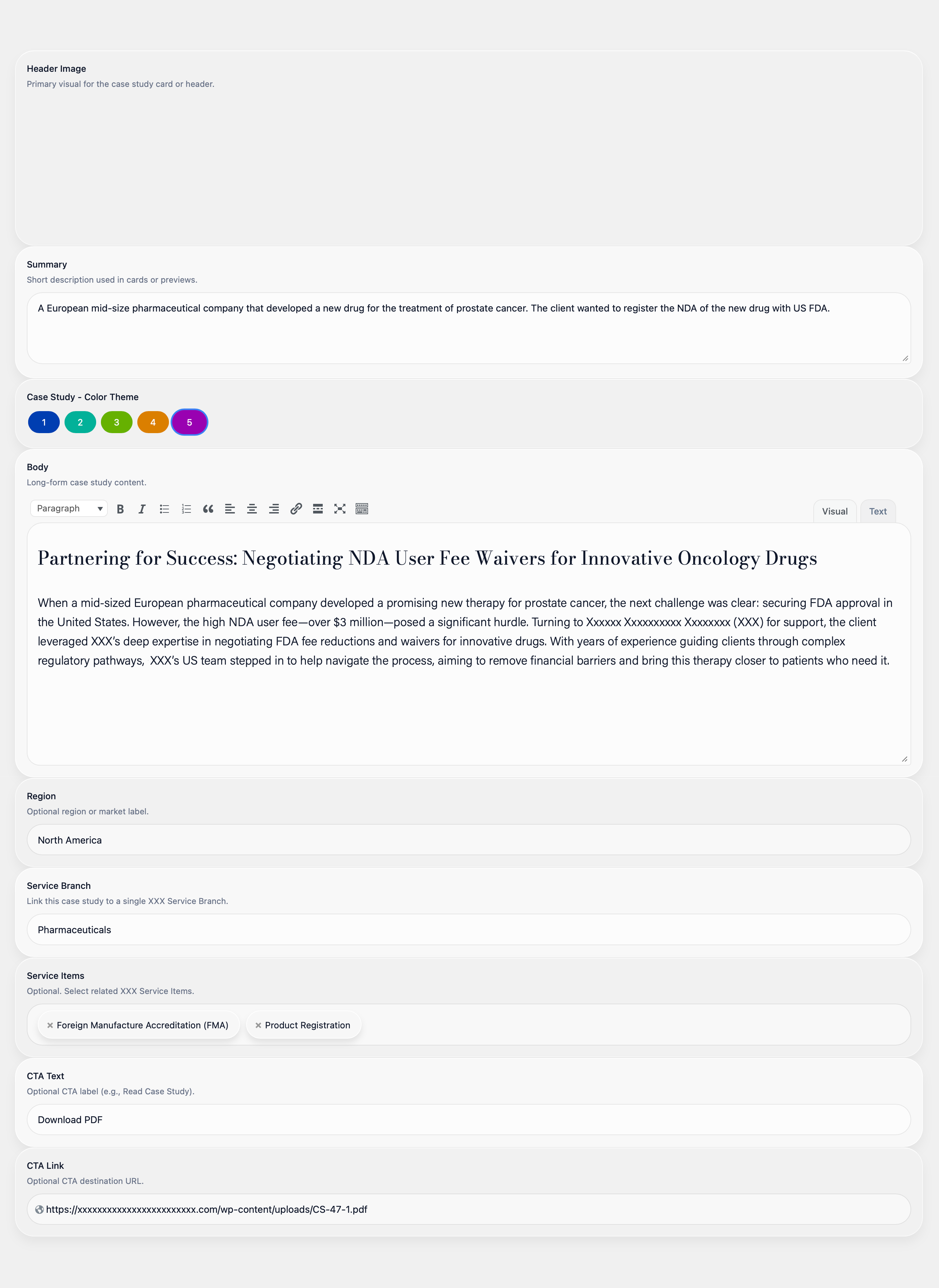
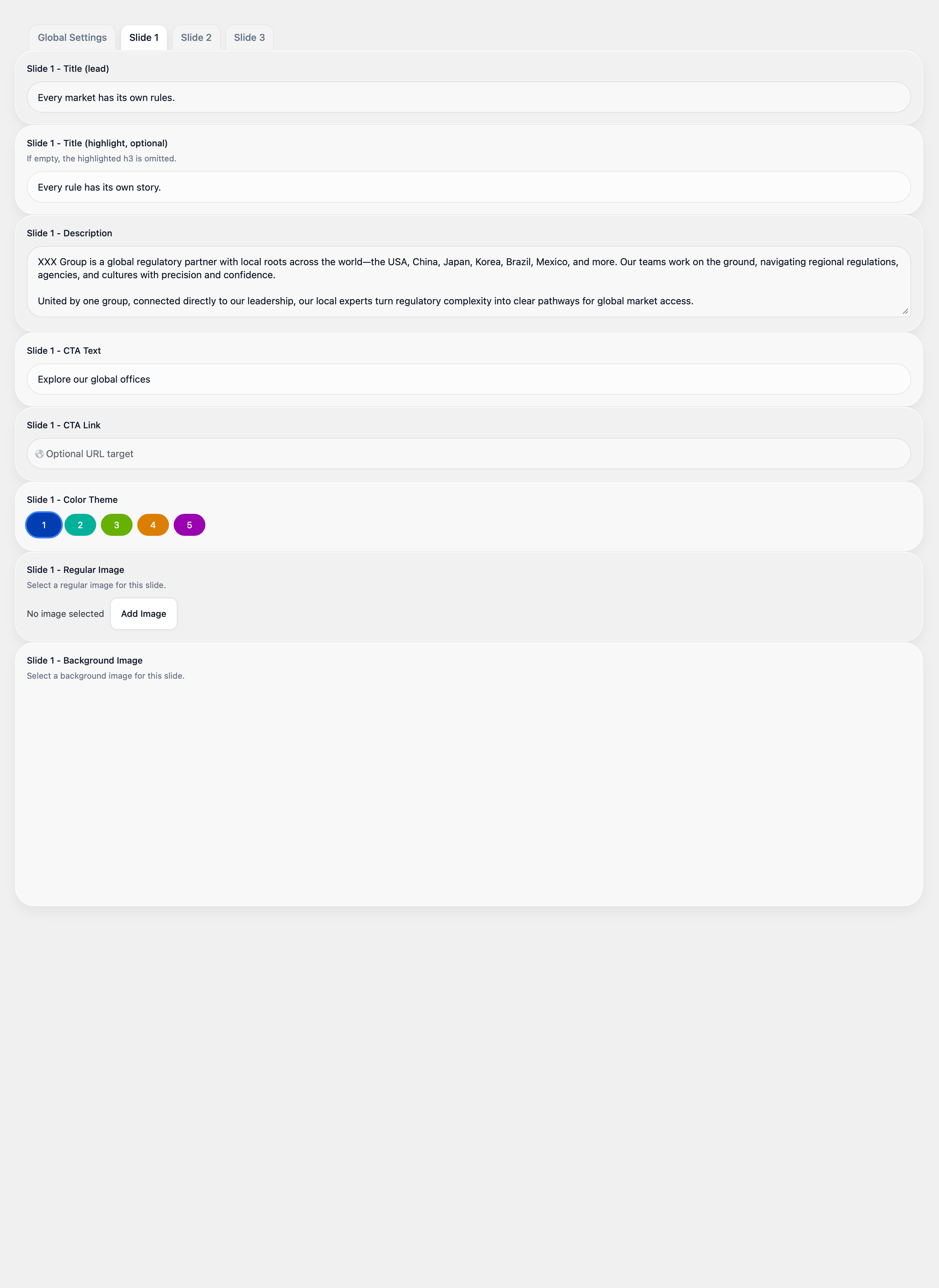
Content Fields, Styling, Placement Controls (simplified)
Primary visual for the case study card or header.

Short description used in cards or previews.
Optional. Select related XXX Service Items.
Visitors experience clarity. They see relevant services, accurate information, and meaningful connections. What they don’t see is the complexity behind it – the structure quietly ensuring everything appears where it should. Imagine a living knowledge base, where staff and designers determine the placement and connections of each piece.
For editors, this changes everything. Instead of fighting the system, they work with it. And instead of maintaining pages, they maintain knowledge.
What we built was more than a website. It was an infrastructure for communication — designed to support global scale, organizational complexity, and long-term growth. Even the backend was intentionally structured: custom-designed fields and editorial interfaces ensure that content is entered in the right way, from the very beginning. Because when the structure is right, everything else follows.
Contact us or simply leave a comment below and we will get back to you.

0Comments